YOUR FIRST CLASS FREE. LIMITED AVAILABILITY.

Everyone Can Code
Let your child discover the joys of coding through the power of play, imagination, and critical thinking.
Montessori-inspired coding activities to encourage Creative Thinking and Problem Solving.
Brave Coders
Ages 4 to 6
RM250/month
60-min weekly classes per semester
Brave Coders begin their coding journey through play-based learning using our physical coding kits to develop digital literacy skills and express their creativity.
Learning objectives:
Mighty Coders (level 1-2)
Ages 7 to 9
RM300/month
90-min weekly classes per semester
At this stage, students work on challenges to exercise creativity, problem solving, and collaboration. They will begin to take their first steps to translate their coding knowledge from block to text-based programming languages.
Learning objectives:
Star Coders (level 1-2)
Ages 10 to 12
RM300/month
90-min weekly classes per semester
Star Coders build computational and digital proficiency by solving coding challenges.
Learning objectives:
Build and Code A Robot
For Mighty Coders and Star Coders
RM200
2-day weekend classes (4 hours each day)
Build a complete robot while developing coding skills. Robotic education is one of the best methods for helping your child retain the coding concepts that he or she practice. This class offers the rewarding experience of creation and challenges kids without overwhelming them.
Build and Code Your PC
For Mighty Coders and Star Coders
RM400
2-day weekend class (4 hours each day - lunch provided)
Some of the things your child will develop as a part of this class.
Benefits of technology and the right kind of screen time.
We offer coding and robotic activities to empower young learners to move beyond technology consumption into problem-solving, creation and innovation.
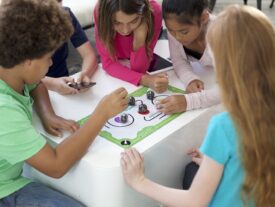
Computational Thinking
Computational thinking trains the mind to see how challenges around us could be addressed through computing concepts and practices. It is an incredibly empowering skill that exposes pupils to critical thinking, troubleshooting, and problem-solving.
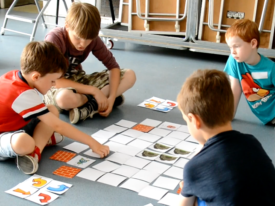
Screen-Free Coding
Our screen-free coding class is an excellent introduction for 4-5 year olds delivered in an age appropriate manner. Children assemble sequences in an interactive game-based learning environment to practice coding concepts.
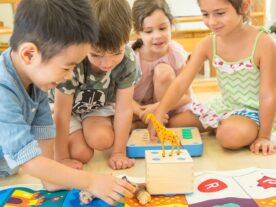
Hands-on tactile learning
Children learn to use expandable coding blocks to create their very first algorithm. Our tactile coding devices allow your child to learn programming through adventure and hands-on play in a Montessori-friendly way.
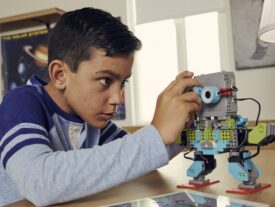
Coding with Robots
Learning coding concepts through robotics makes it more engaging and manageable. Robotic education teaches kids through building and making. They develop their programming skills by discovering new ways to get their robots to move.
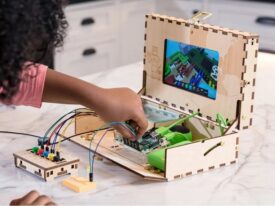
Build and code a PC
Children building their own computer kits are a great way to develop STEM skills. They develop their understanding of how electrical circuits and components function, and navigate coding challenges.

Instill a growth-mindset
Children face roadblocks and challenges in coding activities that must be cleared if they are to reach their goal. A growth mindset fosters motivation, resilience and persistence. It will supercharge their capacity to learn and grow.
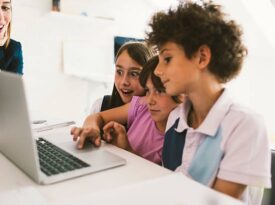
Collaborative Learning
Children who find collaborating difficult, are the ones who need it most. Instead of sitting alone by themselves with their devices, we create a variety of learning experiences which enable them to work together to reach a common goal.
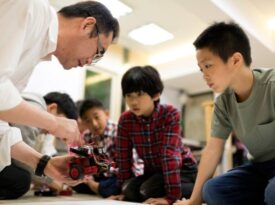
Social-Emotional
The activities in coding classes facilitate opportunities for students to work through social dilemmas. If children can code and receive top grades but cannot manage their stress and emotions, or practice conflict resolution, none of the other stuff is really going to matter.

Dance Exercises
When our kids need movement breaks, we switch lessons to fun dance exercises to give them time and space to refocus. These exercises were created by child development experts to engage kids to overcome short attention spans so they can be their best.
What is the right age for kids to learn to code?
01. Critical Period of Language Learning
It is never too early to help your kid learn coding. Learning how to code is like learning a foreign language. Younger children learn faster than adults because their brains are still developing – sometimes referred to as the “Critical Years”. There is never another time in the life of the child when conscious learning will be so important.
02. Creative Thinking Abilities
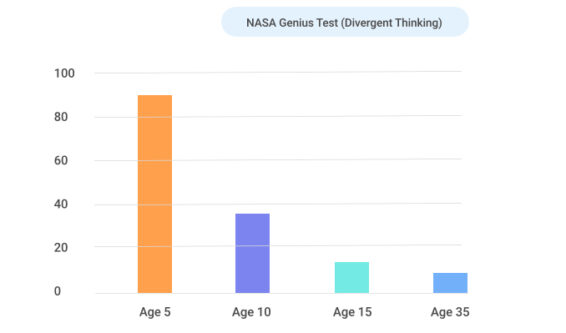
It’s known that with age, we lose our ability to think creatively; with studies showing that “98% of 5-year-olds scored at the genius level in such a test of divergent thinking. Test-takers aged 10 however, saw their number drop to 32%, and only 10% of high-school-age test-takers scored at the genius level”. Once these elementary years are over, and the child moves into adolescence, hormones and new social interests tend to overtake academic interests.
Teach kids to control technology and not let technology control our kids.
We help young learners move from passive consumers of technology to active designers and shapers of the digital future.

Sergey Brin & Larry Page
Google Founders
The founders of Google both attended Montessori school as children and they credit that early education to some of their success as adults. “We both went to Montessori school, and I think it was part of that training … of being self-motivated, questioning what’s going on in the world, doing things a little bit different.”

Jeff Bezos
Amazon Founder
Amazon’s founder, who proudly cites his Montessori roots, is a study in contradictions: analytical and intuitive, careful and audacious, playful and determined. Critics note his extraordinary ability to learn from others, one hallmark of Montessori education.

YoYo Ma
Winner of 15 Grammy Awards
A child prodigy cellist and Montessori student, Yo Yo Ma learned to early to follow his own interests and think outside traditional definitions. Today, critics call his artistic style “omnivorous” in reference to his versatility, his notably eclectic repertoire and his musical iconoclasm.
Why are kids around the world learning to code?